|
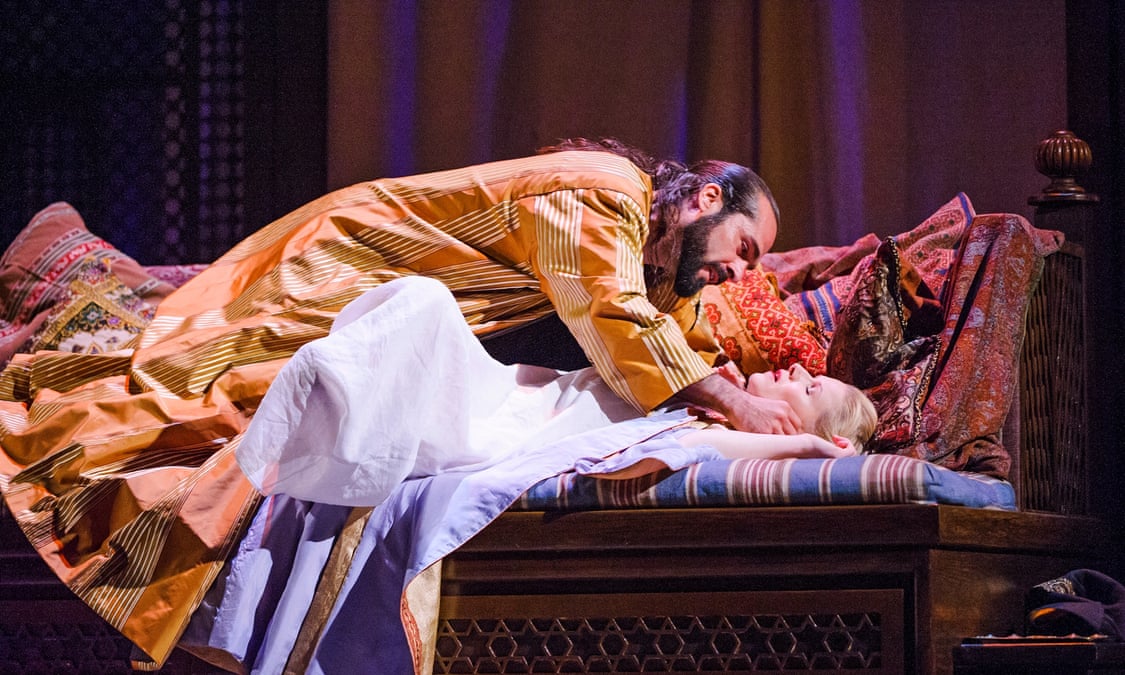
| Taylor Stayton as Count Almaviva and Alessandro Corbelli as Dr Bartolo in Rossini’s The Barber of Seville at the BBC Proms 2016 Copyright: BBC/Chris Christodoulou |
Glyndebourne has returned to the Proms for Rossini’s mad opera of disguises and shaved beards, where the smiles and double entendres never seem to end. It is the first time that the BBC Proms have added The Barber of Seville to its programme, performed as a semi-stage presentation, and as last night highlighted it proved to be a spectacular night of giddiness, charming music and theatrical comedy.
The opera, based on the first of a triology of plays by Beaumarchais, follows the journey of the Count (Taylor Stayton) as he seeks means to claim his love Rosina (Danielle de Niese), yet her brutish bore of a guardian Bartolo (Alessandro Corbelli) intends to marry her, and keep her for himself. But then, there is Figaro (Björn Bürger) – he’s the fixer. Together with the Count, Figaro assists him in his mission for love whilst getting themselves into numerous silly mishaps.
Both lead characters Figaro and the count, performed by Bürger and Stayton, are confident and animated - they play off well together. Vocally and theatrically they make a good duo, like jumping into each other’s laps, and harmonise with poise and lyricism. Corbelli gave a mighty and hilarious performance as the curmudgeon Bartolo, and was a great sport at it. In certain parts Corbelli had to sing fast and his vocal skills and timbre may have been compromised, but there’s an edge to his talents which makes him completely likable and amusing to watch.
 |
| Danielle de Niese as Rosina and Alessandro Corbelli as Dr Bartolo in Rossini’s The Barber of Seville at the BBC Proms 2016 Copyright: BBC/Chris Christodoulou |
Niese, the wife of Glyndebourne’s chairman’s grandson, envisions Rosina to be a strong-willed cheeky flirt with eyes only for one man Lindoro, who the Count disguises himself as. Although her Rosina may bat her eyelids and appear tied to Bartolo's chambers, Niese assures the audience that Rosina has a spirit that wants to run free, away from a restricted married life with Bartolo's crankiness. Her Una voce poco fa was dynamic and entertaining; it called for a huge round of applauses as her voice was loud enough for the Royal Albert Hall to hear, yet I’ve heard stronger performers of Rosina’s pinnacle aria elsewhere. As she specified in an interview with Rebecca Franks, she is aware that Rossini wrote some parts of the opera for ‘super-high ranges’ and as she is a lyric, not coloratura, soprano, who sticks with the mezzo-soprano range, this inevitably causes some challenges for her. Nonetheless her performance was an impressive one, which enthralled prommers, including the male prommer who she ran to – she gave him a quick kiss on the cheek and jumped back on the stage again (well, that’s what I gathered from my seat).
Italian conductor Enrique Mazzola provided Rossini’s sweet scented score with a dash of stage pizazz. This was light-heartedly performed by the London Philharmonic Orchestra demonstrated through delightful harps, graceful clarinets and lively strings which enchanted prommers. Mazzola and the LPO also played a part in the storyline frolics too, by breaking the fourth wall; passing Rosina’s love letter to the Count and Mazzola having fun with the grumpy Bartolo who seemed to think he knew more about music than the maestro.
Italian conductor Enrique Mazzola provided Rossini’s sweet scented score with a dash of stage pizazz. This was light-heartedly performed by the London Philharmonic Orchestra demonstrated through delightful harps, graceful clarinets and lively strings which enchanted prommers. Mazzola and the LPO also played a part in the storyline frolics too, by breaking the fourth wall; passing Rosina’s love letter to the Count and Mazzola having fun with the grumpy Bartolo who seemed to think he knew more about music than the maestro.
 |
| Conductor Enrique Mazzola and Alessandro Corbelli as Dr Bartolo in Rossini’s The Barber of Seville at the BBC Proms 2016 Copyright: BBC/Chris Christodoulou |
Joanna Parker’s costume designs seemed to set our opera somewhere in Seville in the 17th century, with vivacious and handsome colours yet there were slices of the modern shown through Stayton’s cool full-length jacket and Niese tightly fitted, glamorous dresses.
Director Sinéad O’Neil's staging is a simple yet effective one. The performance at the Royal Albert Hall was clean, witty and infectiously fun. To think that the premier of the opera was a sham in 1816 baffles me as performances like last night, where there's a joke hidden in every corner of the staging, verify why The Barber of Seville is a popular masterpiece - not only composed to entertain opera newbies.
Director Sinéad O’Neil's staging is a simple yet effective one. The performance at the Royal Albert Hall was clean, witty and infectiously fun. To think that the premier of the opera was a sham in 1816 baffles me as performances like last night, where there's a joke hidden in every corner of the staging, verify why The Barber of Seville is a popular masterpiece - not only composed to entertain opera newbies.
 | |
Danielle de Niese as Rosina, Björn Bürger as Figaro, Taylor Stayton as Count Almaviva and Janis Kelly as Berta in Rossini’s The Barber of Seville at the BBC Proms 2016
|