Saturday, 9 April 2016

Deutsche Oper Berlin 2016: Salome ★★★ and Elektra ★★★★

 
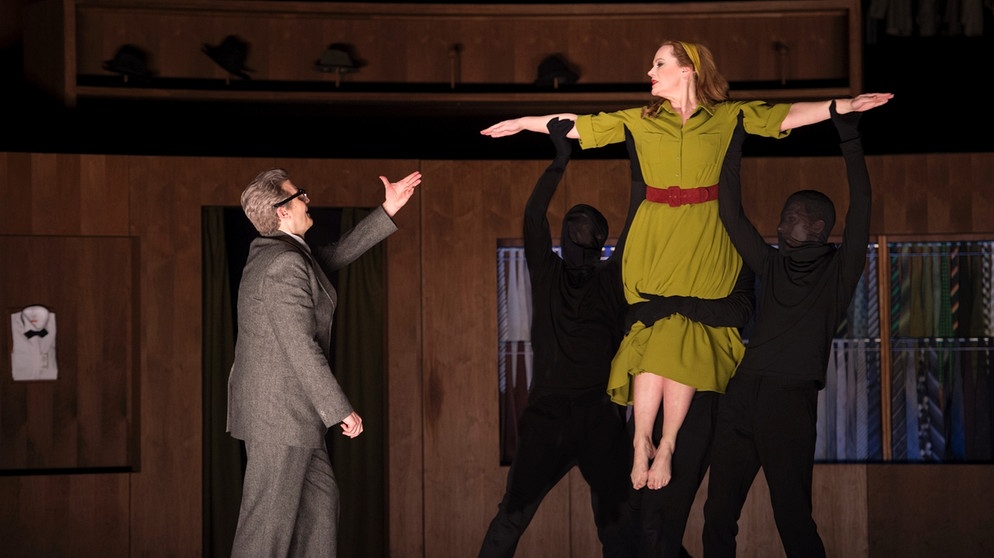
Salome: Photo by  Monika Rittershaus

This month sees many operagoers heading over to Deutsche Oper Berlin for a Strauss extravaganza.  Der Rosenkavalier, Die liebe der Danae, Elektra and Salome are a few of the operas scheduled in and I had the pleasure of seeing Evelyn Herlitzius as Elektra and Allison Oakes as Salome this weekend.

It was my first time at the oper haus and I learnt much about its individuality and uniqueness from its friendly staff, quality of productions and audiences. For a start, while I fretted over finding an English translation of the librettos for these operas, it really wasn't needed. Deutsche Oper provides surtitles in both English and German - simultaneously! Not only does it make life easier for people like me who can't speak or read German, it can be very appealing and encouraging for its international audience. The productions (having seen both Salome and Elektra on consecutive nights) were irrefutably modern and abstract, yet I’m aware that I’m limiting my judgement based on two productions only. And there's no problems on the acoustics side either. Although it is large auditorium there was hardly any obnoxious echoes. Pretty solid sounds if you ask me.

Other things that added to my pleasurable experience at Deutsche Oper included the dress code which is practically nonexistent (not that I have a hard time deciding what to wear for the ROH OR ENO). Also, how easy it was to grab my jacket without having to worry about a stampede of fussy people, shoving and elbowing each other to get their belongings. In fact the cloakrooms are conveniently located at the entrance – it’s the first thing the staff attendant will bring your attention to. There’s also a decent bar on the first floor to grab a drink before the show.


Salome ★★★

I saw the Deustche Oper Berlin orchestra perform Salome back in 2014 at the BBC Proms, under conductor Donald Runnicles, so I knew musically I wouldn’t be disappointed. Tonight saw Alain Altinoglu conduct the orchestra, and although it was my first time seeing him perform, I was more than impressed as he encapsulated much of the drama and intrigue of this fascinating opera.

Vocally it was its lead soprano Allison Oakes who was the diamond in the production. Through and through, she portrayed a cold and cruel Salome, wary of her step-father’s lustful infatuation with her. Vocal quality was undoubtedly top-notch for many of its lead soloists including Michael Volle (Jochanaan), Herodias Jeanne-Michèle Charbonnet (Herodias) and Burkard Ulrich (Herods) who I had seen at the BBC Proms 2014 as well. However it was the staging that failed to move me. Oscar Wilde’s Succès de Scandale (1891) which Richard Strauss adapted into an opera, seemed not so scandalous here on stage.

Director Claus Guth designs the stage as a high-end tailoring store for men with silk ties and mannequins on display. Herod’s soldiers including Narraboth (Thomas Blondelle) are suited up and just as robotic and zombie-like as the mannequins. Guth has six young girls running and dancing on stage randomly. All different ages, they resemble Salome at various phrases of her childhood and adolescent life, and this could be interpreted as Herods seedy perception of Salome. Its paedophilic nature is made known and deliberately perverse, though Strauss’s opera deals with a variety of sensational and biblical notions, not just necrophilia, that caused much controversy at its premier in 1905. In this production, however, Guth leaves it to the Deutsche Oper Berlin orchestra, Altingoglu and the expert soloists to unleash the emotional turbulent music of Strauss to carve out the sensationalism, blood and moral destruction for the audience, made not explicit on stage.

The sensational part of this production, however, is how drip and drab the staging was. Jochannas is introduced as naked and found in a rubble of clothes. As he sings and tells Salome to stop trying to tempt him, he slowly puts on a suit and I wonder whether this has anything to do with Salome’s power and authority in the narrative... (I don't know, the mind boggles.) Either way, I found myself wasting time attempting to decipher the abstract symbolism on stage than actually enjoying the performance. Oakes, Altinuglo, Volle and Ulrich and the music seemed to be the production's saving grace.

Elektra ★★★★ 
Photo by Bettina Stöß

Having seen Donald Runnicles conduct for Salome at the Royal Albert Hall back in 2014, I knew I was guaranteed a solid performance. Here Runnicles as well as the Deutsche Oper Berlin orchestra were tenacious and much has to do with Strauss’s score, full of dissonance, leitmotifs and chromaticism. It’s hard to fall asleep when the music screams revenge!

Evelyn Herlitzius as the bitterly resentful Elektra is the tour de force of the production, and this is shown from the moment she sings the first few bars of "Allein! Weh, ganz allein.” The singing is praiseworthy and engaging; you forget where you are and all eyes can’t stop themselves from gazing at Herlitzius calling for her father Agamemnon. Though distinguished vocals aside, her potrayal of Elektra is toxic, psychotic and even scary. She describes Elektra as obsessive. Addicted to the idea, and willingness, to kill her mother and her lover. It's not a pretty picture and Herlitzius transcends that.

This opera of disjointed family relations, Greek royalty and murdering backstabbers takes place on Bernd Damorsky’s soil and dry mud stage, enclosed in golden painted walls. Is this the mind of Elektra? Shrouded in gold but stuck in limbo? The staging has nothing else to distract us but a door that opens above Elektra where her treacherous mother Queen Klytämnestra watches down on her. This minimal staging worked appropriately and permitted the audience to focus on its performers, Strauss’s phenomenal music did the rest. Doris Soffel as Klytämnestra hit the notes needed, even though her red couture made her look like Cruella de Vil's doppelganger. Her hideous laughing was effective, making her character easier to hate.

Elektra’s sister Chrysotemis - who Elektra attempts to get kinky with, attempting to engage in some incestuous kissing, fondling and rolling around on the soil - was sung by Manuela Uhl. I wasn’t entirely convinced by Uhl’s singing, which managed to move some of the audiences (as I saw at the curtain call). What she successfully did, however, was manage to irritate me with her innocent and non-confrontational depiction of Elektra’s sister. I found her annoying, but perhaps that’s the point. Chrysotemis doesn’t want to help her sister avenge her father’s horrific murder because, essentially, she is a coward.

Tobias Kehrer was mighty impressive. I had seen him at the Royal Albert Hall singing as Osmin in Glyndebourne’s 2015 production of The Abduction of the Seraglio, which made my viewing of him in the role of a serious and semi-heroic character more intriguing. From an oafish and comedy character to seeing him as Oreste, the son of Agamemnon, was marvellous. I’m a fan of his rich bass voice and to see him running around in anger through the soil and grace us with a sentimental scene reunited with his distressed sister only proved how versatile he can be as a performer.

Out of the two operas (Salome and Elektra), I felt much more pleased with the second opera, given the less-is-more concepts on stage. Director Kirsten Harms (who was given a
honorary membership of ! at the curtain call of the night I saw her) seemed to have harnessed the best of Elektra, Strauss’s and librettist Hugo von Hofmannsthal‘s highly-powered opera.


The productions of Salome and Elektra have ended but here are various Strauss operas available. Please have a look at their website here. 

Friday, 1 April 2016

Musical - London Coliseum: Sunset Boulevard with Glenn Close ★★★★


"Glenn Close is ravishing. She reprises the role of Norma Desmond, making her debut in London which has won her several awards in Los Angeles and Broadway. Dressed in silks, furs and sophisticated couture, made exclusively for showbiz royalty and divas, she engages the audience’s eyes and converts them all, even those who don’t like musicals. She is a charismatic beaming star when she sings songs including ‘Surrender’, practically whispering before she gives vocal bravado to ‘As if we never said goodbye.’"

Click here to read my 5-Star review at www.LondonTheatre1.com.
https://www.londontheatre1.com/news/134953/5-star-moving-unique-ingenious-production-sunset-boulevard/


Wednesday, 23 March 2016

Wyndham Theatre - People, Places and Things with Denise Gough ★★★★★

"The production’s beaming star, Denise Gough plugs away in to our addict with sheer authenticity. She becomes the single most important focal point of the stage – in fact, she becomes the audience’s addiction. Fuelled by energy and intense charisma, her performance strength is so spot-on that you’ll want to lean forward, get off your seat, just, so you can get closer to her and the highly stimulated stage. It is no wonder that she won the Critics’ Circle Theatre Award for Best Actress 2015."

Click here to my read full review on www.LastMinuteTheatreTickets.com
Ends 4th June. 


Tuesday, 22 March 2016

King's Head Theatre: Così fan tutte ★★★★


There are those who can enjoy La Traviata and La bohème multiple times in a year, but I’m one of those operagoers that can see Così fan tutte again and again. Why? Admittedly Don Giovanni, another of Mozart’s tremendous works, is one of my favourite operas and a lot of that has to do with the highly memorable and addictive music, as well as the hilarious narrative that caused a bit of a stir when it was first shown in 1790 at the Burgtheater in Vienna.

Considering it was written and performed in the late 1700s, some may argue that Mozart’s Così was ahead of its time, depicting would-be fiancées falling for new lovers on the same day their fiancés had been called away to war. It would be fair to say that today, where so-called freedom of speech and supposed gender equality exists, current directors wouldn’t be fazed about the way that women are depicted in this opera.

Così fan tutte translated from Italian means both 'School for lovers' or 'women are like that'. It would be unfair to suppose that ‘women are like that’ and, of course, Mozart or his librettist Da Ponte didn’t compose the opera to voice such opinion but some sources suggest that the young composer was writing against the backdrop of the French Revolution, in the final years of the Enlightenment era where rational and liberal thoughts were motivating creative minds, leading to vast new artistic innovations, including this one.


I’ve seen a variety of productions of Così - from the circus-styled extravaganza at the ENO, the Met Opera’s traditional staging and Opera Vera’s modern-day setting with a cameraman recording Don Alfonso charming a TV audience – and I’ve realised how fun, easily adaptable and versatile Così can be performed today.

Now, the King’s Head Theatre have concocted something far more original, which includes both Così as the opera and the play by Louis Nowra, an Australian comedy, as well. Sadly, due to time constraints, I wasn’t able to see the play but I can tell you that I was, more than, pleased with what I took from the opera alone.

Music director, Elspeth Wilkes plays Mozart's reduced score vividly on the piano. Director Paul Higgins sets his opera in a TV studio with digital screens, diary rooms, a security guard and a talk show host to propel the story forward. This hilarious opera follows the male lovers as they get into the cab laughing away outside the King’s Head Theatre Pub, having sealed a deal with the TV presenter, then the audience watch as their women cry. As they pretend to drive away to a false destination, the fiancés return secretly disguised as trendy, preppy types. Yet, the TV show is more of a reality show that is geared towards tearing up relationships for better entertainment value, false drama and cat fights like a typical Jerry Springer show. 


Baritone Steven East is rich in tone as the philosopher Don Alfonso, dressed in a tacky presenter’s suit, and he comes across as a manipulative TV star than a wise Socrates attempting to teach something new. The reality show tries to prove these male contestants wrong - that their fiancées aren't as loyal as they originally thought - at the expense of ruining their relationship and providing better TV ratings.

Caroline Kennedy recently sang the role of Despina in Opera Vera (click here), a few weeks before I had seen this production, where she gave a supremely confident performance. However, her depiction of Despina here is very different. Kennedy retains the same independent and liberal attitude compared to Dorabella and Fiordiligi, but she shows signs of previously being hurt by a loved one and is forced by the sleazy Don Alfonso to take part in the trickery game. Nonetheless, her different accents and singularly talented and silky smooth voice shouldn’t go unnoticed.


The other soloists also deserve credit. Laurence Panter as Ferrando is bright and enthusiastic, Jevan Mcauley as Guglielmo was incredibly impressive, having a way with charming the audience with his warm, deep voice. Ailsa Mainwaring is a skilled actress too and sung well, yet there were times where she sounded weaker than others.

And then there's Stephanie Edwards as Fiordligi. Not only does she exhibit a tenacious character, she has a stunning, sweet-toned voice and acting prowess that I haven’t seen in a young soprano at an early stage in her career before - she is a soloist I hope to see and hear again! So, if laughing, giggles, TV gimmicks and opera is what you're looking for, then here is it.


Così is showing on the 23rd, 25th, 27th, 29th, 31st March and the 2nd and 3rd of April. For more information and to purchase tickets please click here. http://www.kingsheadtheatre.com/

Sunday, 20 March 2016

How to get cheap Opera Tickets in London, even if they are sold out


There seems to be two misconceptions about opera tickets. Firstly - a point which has been argued to death - that 'opera tickets are expensive' and secondly, once a show, or production, has sold out there is no way you can see it, ever!

As a reviewer and blogger, I have the advantage of seeing many operas in London through press tickets, however, this is not ALWAYS the case. With the amount of theatre and opera I see per week (which can range between two to five shows in a week), there are occasions where opera and theatre companies do not provide me with that complimentary ticket. This has encouraged me to seek alternative ways of gaining access to sold out shows and finding the cheapest tickets, which might not always offer the best view but still provides me with a means to view 90% of the opera, and hearing beautiful music and amazing voices.

Opera, theatre, even ballets and classical music concerts, are not only composed and written for the rich and affluent. Keen culture vultures can go and enjoy shows without breaking the bank! Alongside discounted theatre websites and (believe it or not) newspaper, magazine and online publications, actual opera companies offer reduced tickets and special offers as well! 

Here are two examples from newspaper, magazine and online publications:
For the 5-Star rated Akhnaten at the ENO, Time Out were offering 40% off on tickets. 
  • Dress Circles tickets on Thursdays, Fridays and Saturdays were £79 (now £47.40) and Upper Circle tickets were £39 (now £23.40).
  • Dress Circles tickets on Tuesdays were £59 (now £35.40) and Upper Circle tickets were £34 (now £20.40). (Click here to see the offer.)
The Daily Mail also, at times, offer £10 tickets to Sussex Opera House at Glyndebourne. Although they might not be available on ideal dates (or close to the stage), it's still a massive chunk from the usual £90+ to £200+ tickets, which is the going rate for most Glyndebourne operas. (Click here for article.)

Keeping a close eye on the schedules and calendars of your favourite opera companies, opera festivals (Grimeborn, Tête-à-Tête) or concert halls (Barbican, Royal Festival Hall, St John's Smith Square), is probably the most effective way of knowing what operas are being showed so you can prepare ahead and purchase the ticket(s) you want, before they get snapped up by someone else. 

Social media, particularly Twitter, is another way of keeping tabs on opera tickets (including returns) on the day. Sometimes fellow Tweeters (and opera lovers on other social media platforms) let people know if they have tickets up for grabs. I've been fortunate enough to meet some very generous operagoers and classical music aficionados who have offered me their spare ticket last minute through Twitter and Facebook.

I've provided a list of opera companies (unfortunately not all) that not only dispel the idea that opera tickets are expensive but provide ways for customers to see a sell out show on the cheap!

The English National Opera (ENO)

    • Cheap tickets: Balcony tickets, in the first and second rows, are worth £12, but they come with a restricted view e.g. a pole or safety bar is in front of you, but I've never been fazed by this as I tend to see the majority of the staging. These tickets sell out fast, so find out when the ENO release tickets for the opera and book early!
    • Cheap tickets: Opera Undressed (£25) (Click here for more info) I've managed to get stall seats from Opera Undressed, which is usually worth £100+. All you need to do is register and you will get an email that will indicate when you can purchase your Secret Seat ticket(s). At the end of the performance, you also get the chance to meet some members of the cast and a lovely drink (G & T) on the house. However, there's only one or two opportunities to take advantage of Secret Seats, so perhaps get a friend to register thereafter to ensure you can continue to use Secret Seats. It should be noted, however, that these tickets are targeted at newbies to opera, so for those that that are regular operagoers...
    • Cheap tickets: Secret Seat (£20) is probably the best option (Click here for more info.) Secret Seats are released during the priority booking period and are for stall and dress circles seats, which are usually priced at £30. First, you decide when to see the opera and then you book online, in advance! From those who have experience booking them, they suggest you book Secret Seat tickets for several operas in the season. The only catch is that if you book for a group, of say four, sitting next to all of them isn't guaranteed, but you're promised to sit next to at least one. Also, although the website says there are a limit on Secret Seat tickets, there have been occasions whereby operagoers have managed to get Secret Seat tickets on the day of the opera, so it is worthwhile keeping an eye on the ENO social media accounts in case they pop up.
    • Cheap tickets:Access All Arias - If you are aged 16-29 or a full time student, you can purchase stall tickets for £30, dress circle tickets for £20 and upper circle tickets for £10 through Access All Arias. You can also bring another adult with you for the same price, and purchase a programme booklet for half the price. Talk about convenient! (Click here for more information.)
    • Cheap tickets, and great for sell out shows: The £10 Standing ticket - I recently discovered this method for ENO's Ahknaten, which was completely sold out. Surprisingly, I felt that while I was watching the opera, I had a better view than those sitting in the row in front of me. You can only purchase them in person on the day, and sometimes you can buy an extra ticket for your friend if they are running late (which I was.) When I arrived at 6.30pm (for a show that started at 7.30pm) there were many standing tickets available, therefore there isn't a limit of them on the day. My advice is - just grab your opera glasses and ensure you wear the most comfortable shoes, then enjoy the show! Of course, I'm not recommending this to anyone who has been advised by their doctor to avoid activity that requires standing for a long period of time. 


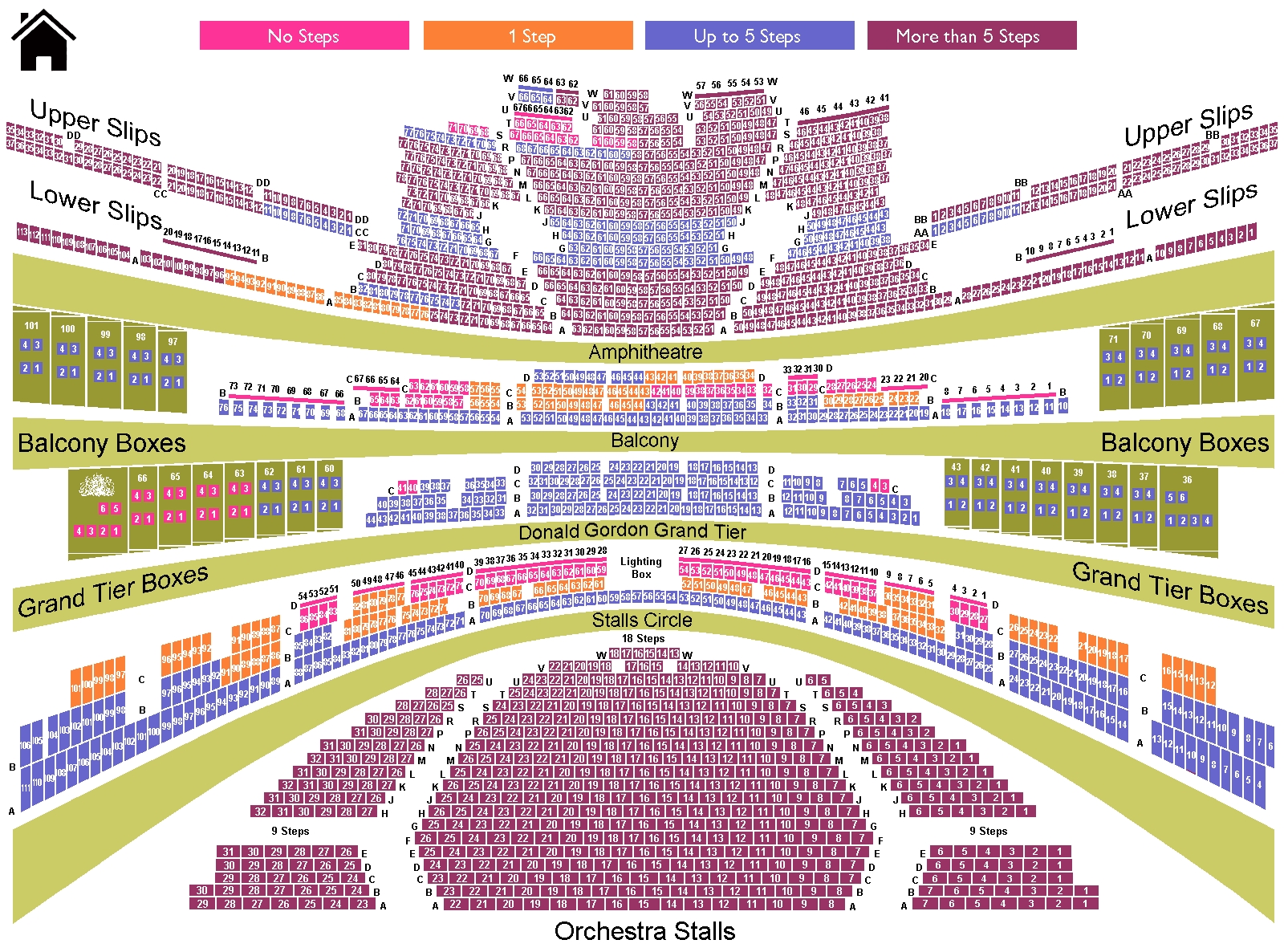
      • Cheap Tickets: Upper Slips for £4 - £18 - Last year, to my joy, I discovered £4 Upper Slip tickets to see one of Tchaikovsky's ballets. I also managed to see La Traviata with Sonya Yoncheva for £14. These seats are on the side of the stage, high up, more so than the amphitheatre level, with a restricted view, yet I was pretty satisfied with what I was paying for. It's worth mentioning that it's a game of luck when purchasing these tickets - you don't know which side has the best view. Unfortunately the ROH box office doesn't know where the best side to view the production is until a week before the first night, usually the time when dress rehearsals have taken place, so you might be out of luck on choosing the wrong side to sit if you book months in advance. But there are...
      • ... Day tickets, which range from various prices. These can be cheap tickets and are great for sell out shows: On the actual day of the opera (or ballet), the ROH offers between 60 to 70 day tickets, so you can physically queue up to get a ticket of a sold-out performance. For your information, it's one ticket per person and the box office doesn't open until 10am! However, depending on the cast, conductor or popularity of the opera, you might have to get there very early. For the in-demand Tristan und Isolde production with Nina Stemme, two years ago, I queued up from 8am and managed to get an extraordinary view from the Grand Tier Boxes for £40. For Jonas Kaufmann and Eva-Maria Westbroek in Andrea Chénier, I was very tired - I queued up from 7.45am, and managed to see the hot cast from the Upper Slips for less than £20. And for the latest Il trittico, I arrived at the opera house at 8.41am and purchased an amphitheatre (S-Row) ticket for roughly £33, which allowed me to view the entire stage and see the wonderful Ermonela Jaho reprise her role as Angelica. 
      • Cheap tickets, and great for sell out shows: Phone in Day tickets - But you can't queue up on the day I hear you cry! Not to worry, from 10am you can still call the box office and see what tickets are available. When I want to see an opera on its opening night and all the seats are taken, there are standing tickets. For Wayne McGregor's ballet, The Ravel Girl, I managed to book a standing circle stall ticket for £6. Yes, £6! Again, wear comfortable shoes! Another example is this week's opening of Musorgsk's Boris Godunov with Britain's favourite baritone, Bryn Terfel where I managed to get a standing ticket for the same location, which was originally £18 reduced to £10. The reason being that it was a restricted view. The actual staging had two levels, which meant that it was hard for some, depending where they sat or stood, to see the higher level. I appreciated the fact that I was advised and made aware by the box office of this disadvantage; despite the restriction, I was still pleased with my view, though some people may not agree. 
      • Cheap tickets: Student Discounts: If you are a student, you can register to get e-mails from the ROH which will update you on special student days whereby tickets, no matter where they are located - orchestral stalls, amphitheatre, grand tier or upper slips - tickets are £10 each. During my student days, I would rely on these a lot and although they are only available on special days e.g. a weekday and not for all productions, they still give newbies an opportunity to get to see an opera live for a tenner.
      Opera Holland Park (OHP): The company offers thousands of ticket for free through their Inspire Tickets range and they go like hot cakes, so you have to apply early to get your hands on them. They also have many tickets at £17 per person. (Click here to look at last year's offer of Inspire.)
      • FREE tickets: 1,000 tickets are available for free for those aged between 7 - 18 and up to four people can apply, such as an adult and three young people. There's a deadline for applications for these free tickets, however, these seats are available for all 32 productions during the summer season. (Click here for more information)
      • FREE tickets: Patrons of the OHP (ages 60+) also have access to free tickets. Each year OHP offer 500 free tickets for the older audiences as well!
      • FREE tickets:Under-30's tickets - 300 tickets are offered to those under-30's and available to book on the phone for each production. (Click here for more information.)
      Small-scale opera productions
      Here are a few example of prices for small and local productions, which also prove how cheap opera tickets really can be.

      And for those that love chamber music and recitals, there's Wigmore Hall's Under 35s Scheme where certain performances are accessible for £5 only. (Click here for more information.)

      I have only provided a handful of examples based on my experience. If you know other ways of getting cheap opera tickets, please let me know and volunteer this information. I believe that I've provided fair examples proving that opera ticket are cheap. If this doesn't convince you that this is the case, I don't know what will. 

      Thursday, 17 March 2016

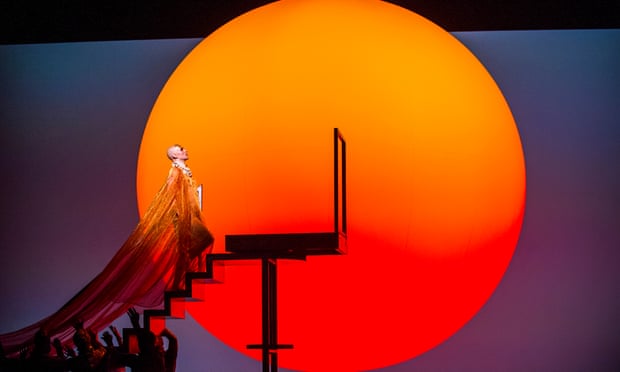
      ★★★★★ ENO: Philip Glass - Akhnaten

      Photo by Richard Hubert Smith
      Director, Phelim McDermott and Improbable Theatre Company have produced something special at English National Opera at a time when the opera house really needs it. From stage designs by Tom Pye and Kevin Pollard, lavish costumes, mesmerising music and unbelievable voices - by soloists and the beleaguered ENO chorus -, this has prompted positive reviews from critics and sell out performances. (I almost missed out on seeing this production if it wasn’t for standing day tickets, which I bought on the day for £10 each.)

      Composed by Philip Glass, Akhnaten is mesmerising, enthralling, and enchanting. I simply had no idea what to expect, yet I left feeling excited about the production and mentally calmer than I had been before the opera begun.  It’s fair to say that there’s certainly something stunning and enchanting about Glass’s music here.

      Not many know of Akhnaten but he’s very different from other pharaohs. The life of Akhnaten, who was pharaoh of Egypt around 1350BC and married to Nefertiti, is known in ancient history for converting his people to believe a new religion, following a monotheistic sun god. The storyline, itself, is rather basic but the staging is finely executed by its remarkable music score and vocals, which is the key focus, I thought.

      Glass (being Glass) has distinctive features to his music – made up of modern minimalism and experimentation – that somehow relaxes and soothes you – it has a way of making you want to pray or at least meditate. McDermott ensures the performers move very slowly and it is this slowness, which increases the grandeur and mysticism of this opera.

      For one thing, there are no surtitles. The singing is partly done in ancient Egyptian (or Hebrew) and English, but there is a scribe (Zachary James) who explains in poetic verse, from the Book of the Dead, on what’s going on in every scenes. James performs with great diction and has the wonderful ability of projecting his voice to the entire auditorium; every person could hear his every word.

      American countertenor, Anthony Roth Constanzo is a complete delight as he performs as the newly made – naked and vulnerable - Pharaoh. His voice is splendid and his acting is completely engaging. Emma Carrington is elegant as Nefertiti and with Constanzo they sound stunning together when they sing a duet in act II. Rebecca Bottone as the pharaoh’s worried mother is also exquisite in voice. 
      Photo by Tristram Kenton
      Karen Kamensek takes care when she conducts but adds a layer of depth, which is audible from the pit. From as far back as the balcony, I could hear every little musical detail and the musicians seemed on point with Glass’s rapid and repetitive score.

      It was almost unpredictable with Glass: one moment I’d think someone’s phone had gone off or someone had loudly poured water into their cup, yet no – that was all part of Glass’s unpredictable score, which is an odd thing to say considering how his music is hugely repetitive. It has a trance-like effect and for the orchestra it was a tough challenge having to keep up but they seemed to be confident and secure.

      What’s also different is the clever input from jugglers who knew how to throw their balls around without slipping, but their ball-playing depict Akhnaten’s power and are not simply there as part of some cheap entertainment ploy. 

      Photo by Tristram Kenton
      The loudest applause went to the ENO Chorus. They were mostly seen in the first act, however, you could hear them in the back singing beautifully as ever in the other two acts. Each time I see them, they seem stronger in voice and stage presence, which comes as a shock to many when we hear about the financial squabbles going on regarding their pay currently - still- in disarray while the ENO's management try to think up a solution.

      I’m glad I went through the trouble of seeing this opera, which woke me up to beautiful sights and sounds. Although others and I will agree that Akhnaten was worth all the stars, there were some that deemed it 'dull' or 'boring' (and I'm sorry that they felt this way) but comparing Akhnaten to The Marriage of Figaro would be the wrong way of justifying why they didn't enjoy it. They are entirely different pieces within the same genre, and there's nothing wrong with preferring a different style over another. For me, this production worked more than I could imagine. 


      Last showing of Akhnaten is Friday 18th March 2016. You can purchase standing day tickets for £10 each in person. Click here for more information. https://www.eno.org/whats-on/akhnaten/