Wednesday, 25 February 2015

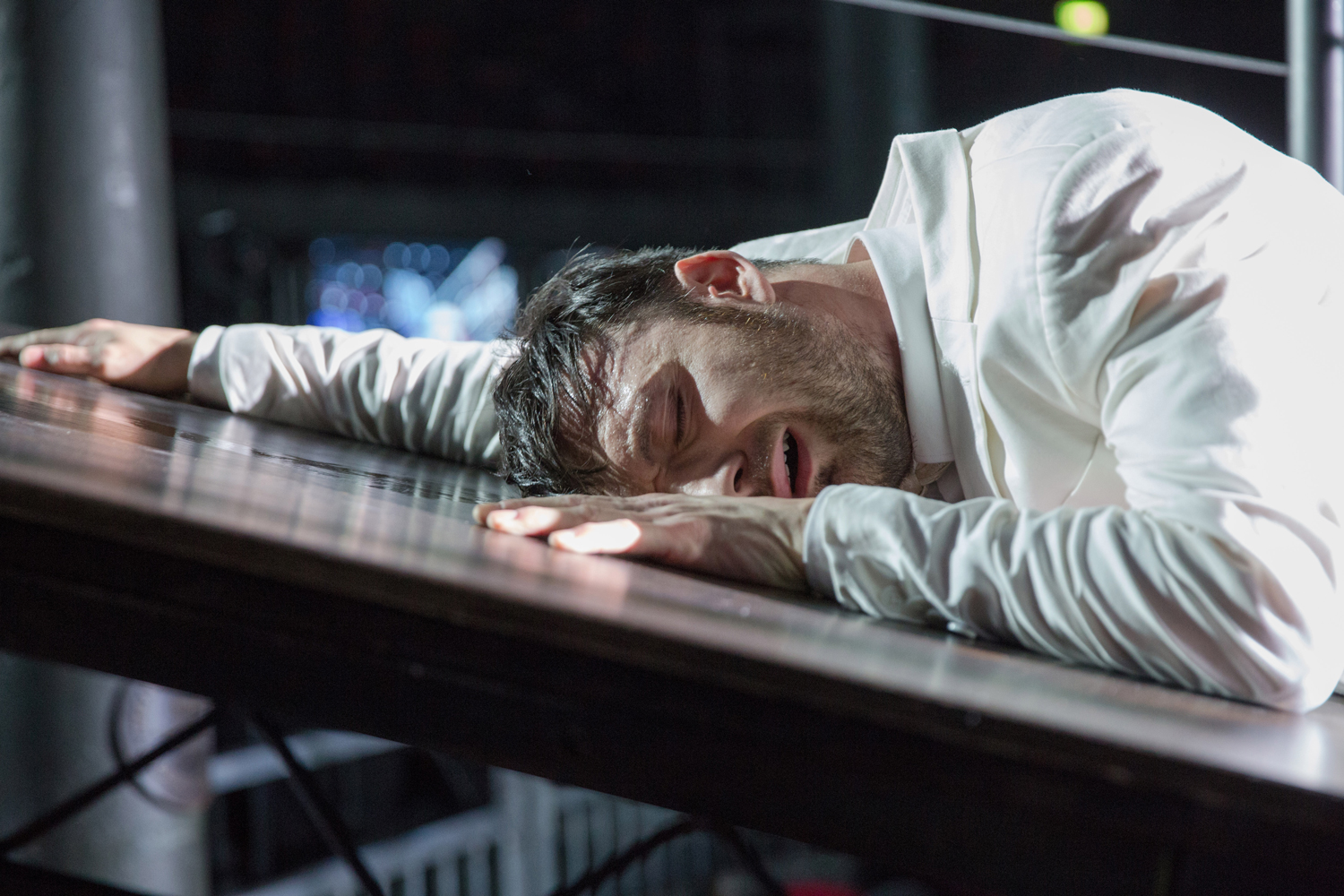
Othello: Rose Playhouse ***

Othello by Time Zone Theatre at the Rose Playhouse

Click here to read my review

Monday, 23 February 2015

Cavelli's L'Ormindo : Baroque Opera at the Samwanaker Playhouse ★★★★★

Baroque Opera at the Samwanamaker Playhouse, as part of the Shakespeare Globe

Click here to read the 5-STAR review
http://www.ldncard.com/blog/lormindo-wanamaker-opera/0177

Thursday, 19 February 2015

Fifty Shades of Bland aka Fifty Shades of Grey: The Film via LDNCARD (Two Stars)


Fifty Shades of Grey movie
Click here to read my two-star review  http://j.mp/1AX7uHF 
http://j.mp/1AX7uHF 

Sunday, 8 February 2015

Royal Opera House: Der fliegende Holländer **** (The Flying Dutchman)


It’s been a good week for Wagner lovers. Covent Garden had their opening night of Tom Albany’s revival: Der fliegende Holländer last Thursday and English National Opera, the nation’s opera house down the road, opened their season with The Meistersinger on Saturday. (REVIEW COMING SOON)

Shown in 2009 and 2011, Albany’s production lays bear the solitude felt from a community of sea bound sailors and forlorn women abandoned on dry land. Their grief is funneled through the voices of our lead singers the Flying Dutchman, which is sung by our nation’s favourite baritone Bryn Terfel with Senta sung by Canadian soprano Adrianne Pieczonka.
Leitmotifs are prolific in Der fliegende Holländer as expected for most operas composed by Wagner. He created fresh and memorable melodies, but not all.  With Der fliegende Holländer his leitmotifs echo emotional tension, suspense, mystery and uncertainty. A nihilistic sense of being is ubiquitous in Albany’s production from stage, music, chorus singers and leads.

Consider all of that bleakness served in an opera devoid of an interval and you might want to run for the hills, but in truth the musical subtleties and Wagnerism enchantment are worth the time and patience. The simplistic stage design, however, left me with a few unanswered questions, on the night, as it didn’t mirror the same magnitude.

For obvious reasons the stark and minimalistic set designs of Michael Levine may give audience more space to listen and become immersed with the music, yet this meant they very little for their eyes. Luckily the hot-blooded chorus singers (and there were many) and notable characterisation from the cast managed to gage our interest. Yet for audiences seated on the left including myself, we were slightly shortchanged as most lead singers, including Terfel, were directed to stay on the left. This led to bitter disappointment for many operagoers on the upper slips. Note: Don't purchase tickets located on the left amphitheatre, slips, etc. 
The conductor Andris Nelsons, positively received in Europe, waved his baton with passion and fluidity as if he had a higher understanding of the Wagerian influences and vulnerability of the opera’s characters. He managed to strike a balance between the sorrow of Terfel and Pieczonka and gusty brawniness of the chorus ensembles, particularly in the very end. Nelsons massive contribution made the production an evening of musical sublimity.

Terfel has perfected the role of the Dutchman as he has sung the role for more than a decade. He depicted all the yearning and despair of a man cursed for seven years at sea. Pieczonka took on the complicated role of Senta. She puts in all the vigour of a vocally tough role, though she didn’t blow everyone away. She aptly unifies the complexity of a woman starved of affection and intimacy, but, for a first night, she failed to bring the required excitement to her performance. Nonetheless they portrayed pathos in the unresolved situation and looked good on stage together. The supporting cast with Ed Lyons, Catherine Wyn-Rogers, Michael König and Peter Rose were also moving and lusty even if they sung through a storm. 

[----So about that 2.5-hour opera and absence of an interval - well, it didn’t help that there was small creek of water on stage, which alluded to the bathroom for many. Think about the poor orchestra as well. Some of the brass instruments got a break, but the rest - nada!]


There is also the live screening of the Der fliegende Holländer on the 24th of February. Click here for more information. Photos courtesy of the Royal Opera House. 


Tuesday, 27 January 2015

Bartók: Duke Bluebeard's Castle - A Horror Opera (Royal Philharmonic Orchestra & Charles Dutoit)

 Sir Willard White
Ildikó Komlósi


I hadn’t come across Béla Bartók before tonight’s performance of his opera Duke Bluebeard’s Castle at the Royal Festival Hall. It was only until the opera began that I realised I was about to experience my first horror opera. 

The orchestra of the night was the dazzling Royal Philharmonic. They shone and soared through Bartók’s multifaceted masterpiece with maestro Charles Dutoit conducting and revealing the dark hues of Bartók's insidious work.
 

It was fairly recent news that Andrea Meláth and Bálint Szabó could not sing the roles of the Duke or Judith due to illness. Yet unexpected replacements Ildikó Komlósi and Sir Willard White, both on top form, saved the show.
 

Charles Dutoit
Komlósi took audiences in and out of Judith’s curious mind and bewitched them with her vocal talent as, both a worrisome woman and passive wife. Sir White elicited traits of a dangerous man from the moment he sang the first note, an inclusion deliberately added by Bartók to enrich his phenomenal score.
 

Despite only being  an hour long, the opera contains some of the most chilling and spine-tingling music you could heard from psychological thrillers, ‘scary’ movies and film noir. Sitting there in the Royal  Festival Hall I recognised similar musical extracts, and had the same reactions, to listening to Strauss’ Sprach Zarathustra, Ridley Scott ‘s Aliens’ films (with scores composed by Jerry Goldsmith) and Bernard Herrmann’s Psycho. 


Judith's Journey in Bluebeard's Castle 

The opera is based on a Duke who introduces his wife to a castle of seven locked doors, spilling blood. It’s too gruesome not to pique anyone’s interest. Mention ‘torture chamber’ and many will realise it isn’t a typical romantic opera.  

For the evening’s semi-staged performance audiences were left to use their imagination through reading Christopher Hassall’s translation of Béla Balázs’s original libretto and allowing Bartók’s musical creativity to guide them on Judith’s steps of opening each blood-soaked door. 

An audio effect was used to enhance the ominous quagmire of terror and dread. It was the sound of air blowing through the hollow and mysterious castle that the Duke and his wife were walking in.  


Each door unlocked a different type of space: the intense stir of strings for a menacing torture chamber in door one; a room of armoury for door two; a treasure room, depicted by a light tinkering sounds from a celesta, for door three; and a fragrant garden, illustrated by discordant flutes, for room four. 


Yet the pinnacle orchestral moments took place when Judith made her way into the fifth door, screaming. The long chords from the Royal Festival Hall’s large organ, shown off by Andrew Lucas, echoed entry into another realm – a next level up of macabre. One soon became concerned, and afraid, for Judith’s life.  


As we moved onto room six blaring brass instruments and hard thuds of timpani increased the dramatic suspense. The inquisitive wife enters door number six, a lake of tears, represented by gentle glissandi from a harp. But it’s too late for any hope of a happier ending. Not even the harp could transform the outcome. 
 

The conclusion had less musical climax, compared to door five, but there’s an apotheosis nonetheless. Here, Bartók mucks with our head. We know that the Duke will kill Judith as he had done with his previous wives but it is this type of titillation, which causes many to love his music.

Bartók 

Bartók was influenced by the existential readings of Nietzsche and the national Hungarian mood at the onset of the First World War. He once wrote, ‘ I cannot conceive of music that expresses absolutely nothing’ and I believe he left the ending progressively quieter, unsettling and unresolved for audiences’ to re-think what death means.

His cinematic visionary music grabs us. Bartók, probably, wasn’t aware his music would be compared to modern-day film or that he'd still be studied for that matter! Yet the opera tells us more about Bartók, which, even, he would admit.  We learn that he was a visceral composer and yet in the face of war conflict, he chose to construct the human spirit through an opera, which, after his death, is cherished by many.  


For more events taking place at the Royal Festival Hall, please click here. 
Photos courtesy of Willard White, Ildiko Komlosi and Charles Dutoit home websites. 

Saturday, 24 January 2015

ROH: Andréa Chénier : Charming, captivating and eclectic, but where's all the grit? ★★★★★


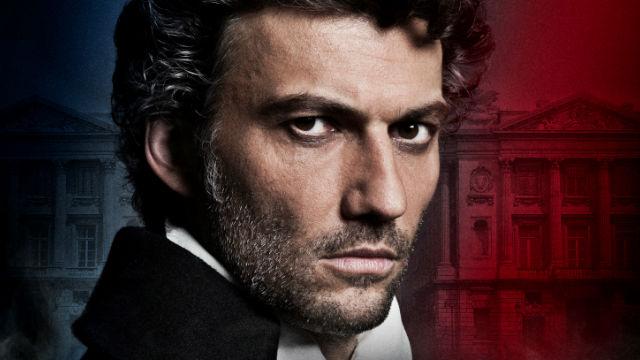
The highly anticipated opening night of Andréa Chénier, after 30 years of absence from the Royal Opera House (ROH), fulfilled almost everyone’s expectations. David McVicar’s extravagantly traditional production provided a gracious setting for Umberto Giordano’s lusty score.  This was topped off with world-class singing from tenor-of-the-moment, Jonas Kaufmann, the front-running star who many had spent their 'bottom dollar' to see. Rest assured many won’t be asking for their money back. 

Based in the 18th century, the historic Andréa Chénier was a poet who wrote against the status quo and was executed during the French Revolution -a tale that coincides and echoes the recent atrocities in Paris. For this verismo and classically tragic opera, however, Giordano sticks in a dagger and invents Gerard, an anti-hero to cause heart ache and anguish in a rivalry for Chénier’s muse and lover Maddalena di Coigny.

Yet despite a gritty tale with a chilling guillotine and hoard of outspoken sans-culottes, Robert Jone’s staging was pretty and pristine with traditional décor, candle lit chandeliers and Jenny Tiramani’s clothes designs of pastel coloured dresses and Kaufmann’s noticeable purple socks. The dances, from gavotte to pastoral ballet, were traditional choreography as well. 
Even for the action scenes set at the ‘Reign of Terror’ to the moments before Chénier approached his impending death, the guillotine and jails appeared newly furbished. Yet compared to the last ROH production of Un ballo in maschera, the quality of the staging was worlds apart with far more cash to spend, it seemed. Perhaps this was the edge that McVicar was looking for in producing this verismo opera. By reinforcing the lack of grit and references to the Mala vita the production recreated a sumptuous and grander opera of romantic sharp music and higher emotional power, which worked marvelously for such a beautiful opera.

Long applause greeted Kaufmann's first aria, Un dì all'azzuro spazio, and no one dared to cough through it. Having been acclaimed for his recent performance at Wigmore Hall, he brought the same temperament and skill into the opera house. His handsome looks mirrored his glorious voice and portrayed a man of conviction, wisdom and lover of Maddelena. 

Željko Lučić also played a substantial role this evening, but had some warming up to do before impressing audiences with his bold voice in act 3. He sung with full force and sensibility particularly in ‘Nemico della Patria’. Despite not bringing the house down, as he did in last year’s production of Macbeth at the Metropolitan Opera, his acting abilities presented a visceral side to Gérald’s fickle and jealous conscience.
Eva-Maria Westbroek was suitably matched to ‘Esparanza’ Maddalena. When Westbroek sang ‘La mamma morta’, in act 3, she sang with courageous pathos, which was superbly followed by a gentle cello solo. Westbroek parked her former role as the starry and debauched Anna Nicole for a tender and vulnerable Maddalena; one could imagine her as a knock-out Mimi in La Bohéme. The opera had a victorious ending with a spectacular love duet evoked by our lead couple, which reached all the money notes: it was a duet that had all the stuff of a truly romantic opera.

 There were other singers that performed marvelously from Elena Zilio, who sang as the blind mother who gave away her son to the war, to Roland Woods as the honest friend of Chénier, Roucher. Peter Hoard, Peter Coleman-Wright, Rosalind Plowright, Carlo Bosi and Adrian Clarke had small roles, yet their theatrical and operatic contributions were valued by the audience.

As for the conducting, Antonio Pappano’s made Giordano’s opera seem almost too perfect. Although euphonious and harmonious, I felt that, the music sounded pure and virtuous for an opera about injustice and the grime nature of the ‘Reign of Terror’.

 One can only wish that there were more scenes with Chénier and Maddalena flaunting their love and more of Kaufmann's operatic prowess and profound presence. The opera, with its additional march music and lavish dances, is charming, captivating and eclectic. If you can’t get a ticket to the Royal Opera House, I’d highly recommend you grab a cinema ticket for the live screen on the 29thJanuary.
Photographs courtesy of the Royal Opera House. For more information, click here. The opera is showing until the 6th February. For more information about the live screening, click here.


Sunday, 18 January 2015

Orfeo ★★★ at The Round House: A successful collaboration or successful mess?

Last Tuesday [13th January 2015] was the opening night and first-time collaboration of the Royal Opera House (ROH) and The Round House of Monteverdi’s opera Orfeo (1607). Orfeo is a Greek mythology that has been molded and re-shaped in art, music and poetry for its symbolic imagery and heartbreaking, defining moment where the hero looses his love giving into temptation and ‘looks back’.

Michael Boyd - former Royal Shakespeare Company’s (RSC) artistic director for the past 16 years - made his debut directed this production. This was also the case for Don Paterson who had the challenge of translating the original libretto into fuller English phrases. Luckily for him he managed to find an already translated version by Anne Ridler but still found the task ‘like trying to fit a set of spanners into a velvet box made for a dinner-service.'

The set design by Tom Piper is bare. Performers and cast move barefoot and make use of a circular stage with built in soundboards. Attached is a long, stretched out walk-on slope that led to the corner of theatre depicting an entry into the other realm. Singers from the Guildhall School of Music and Drama stood on a balcony overlooking the stage with the musicians of the Early Opera Orchestra sat below with beautiful, large string and brass continuo instruments. 

Props are limited to green streamers, taken off and on stage, to replicate a pastoral atmosphere and the beginning of marriage life for Orfeo (Gyula Orendt) and virtuous Euridice (Mary Bevan). What is lacked in physical props, however, are replaced with human movement, acrobats and circus skills by East London Dance: young dancers aged between 11 and 21. There are no water trails or video projections of a river Styx but 15 dancers using their bodily strength to roll on their stomachs, jump impressively high and create human bridges stacked on top of each other. 
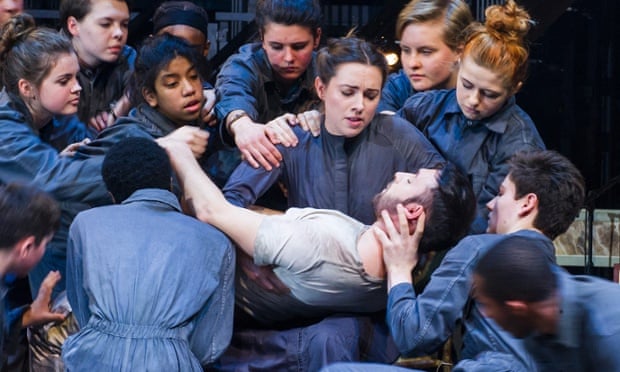
This is where the first part of the production spends a lot of time on - feet stamping, tireless acrobatic movements and irrelevant dancing. This is where the audience’s real grief begins. Not so much on Orfeo's grief. When one should be paying attention to Monteverdi’s opera, audiences move their eyes to a boy attempting to jump over our lead singer Orendt and a boy in front of him. And when Orfeo torments over his loss of Eurydice one of the dancers spins around loosely on the ground in a green streamer, which is rather annoying. Indeed, at this poignant part of the opera it is wise, and acceptable, for directors to add something extra to enhance Orfeo’s disposition, whether metaphorically or direct engagement, but this direction destroyed the entire scene for audiences, including myself. Come the second part and some audiences, a mix of students and veteran operagoers, had already left.

Boyd also framed the opera with a different setting which didn’t bode well with fans of Monteverdi’s opera. Boyd’s court is looked over by ‘pastors’: not shepherds, who are dressed like intimidating priests, except for fresh faced American countertenor Christopher Lowrey whose stunning and silky voice drove out the omnious quality of his priest-like clothing. To add to the religious theme Orendt was introduced as he was in the end: as a pietà of Euridice holding her darling limp in her arms. The ending is saddened with Orfeo hanging loosely from a high-up harness, like a semi-crucifixion, trying effortlessly to touch his Euridice standing far below.

Yet this injection of religious revelation stunted the romance and magic of the Greek myth, I thought. Perhaps Orfeo shouldn’t have turned around to check if his lover was actually there or arrogantly attempt to outsmart mortality, but with all these law-abiding priests hovering over him it leaves very little room for audiences’ to use their imagination. To go to the depths of hell to save one's love is a beautiful act that permeates in Monteverdi’s operatic score, but this was taken a step back in Boyd’s production. Anything can happen on ‘the stage’ and, for many, this is the reason why audiences come to theatre. Insert priests for marriage, fine, however, for an opera like Orfeo priests act as a restrictor and drawback. To add to their lack of direction was the definitive moment Orfeo looked his wife. What should have been a climactic moment was treated like any moment. How disappointing!

But ‘how about the singing?’ I hear you ask. Pretty good in terms of opera standards and what I’d expect from a baroque opera, despite what was happening on stage. Hungarian-Romanian baritone Orendt ignites a courageous Orfeo. Nothing about his stage presence made him appear feeble or morose even if the arias sang of misery. Bevan was also starry and oozed all that was pure of Euridice even though she plays a small vocal role, mostly, in the first half. Susan Bickley as the messenger entered from the tip of the slope with her face shadowed depicting a heavenly mystery with her tremendous voice, which echoed pity. Callum Thorpe as Pluto and Propserpina sung by Rachel Kelly were also absorbing with their classy cocktail-party attire, and not forgetting Susanna Hurrell, as a joyful nymph, Anthony Gregory and Alexander Sprague who delivered on the night as well. 
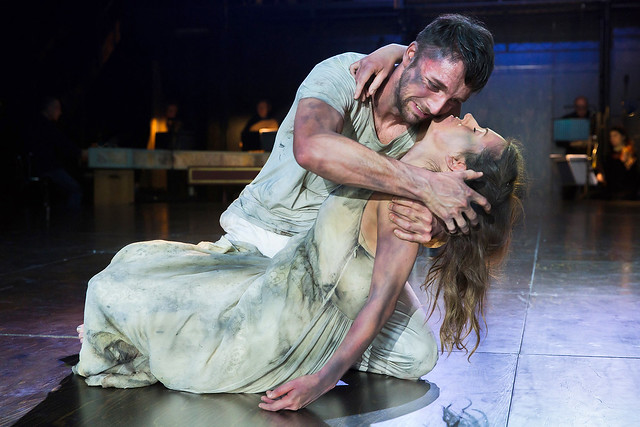
So is Orfeo a successful collaboration or successful mess?

Indeed, both ROH and Round House have succeeded in their own unique ways. Some may say that the Royal Opera House thrives as being one of the grandest opera houses in the world. Our north London theatre, however, isn’t known for performing operas. It prizes itself as a ‘engine house’ of contemporary genres from theatre, rock and punk. Much credit goes to the Round House for its supportive campaigns to encourage younger artists; from London communities, to get more involved in the arts.

So bearing these things in mind in that these establishments’ have their own contrasting and distinctive qualities, was Orfeo a successful collaboration, welcomed by audiences, or a complete mess? The answer is ‘no’ to the latter, but for those who are seeking that ‘opera experience’ where your seats are worth £120, you dress up to the nines and buy champagne at the interval (or whatever that might mean to you), don’t bother. On the other hand, if you are a true lover of early baroque opera and a sincere Monteverdi follower than come with your ears open as you won't be let down by the fierce and talented cast, included the postgraduate singers of Guildhall School of Music and Drama with stylish conductor Christopher Moulds and musicians of the Early Opera Company. There are a few stage directions and themes that didn't quite mesh, for me, but this is a first collaboration after all. Maybe it won't be try too hard next time.

Currently showing until 24th January. Click here for more details. Photos courtesy of the Royal Opera House and the The Round House.